
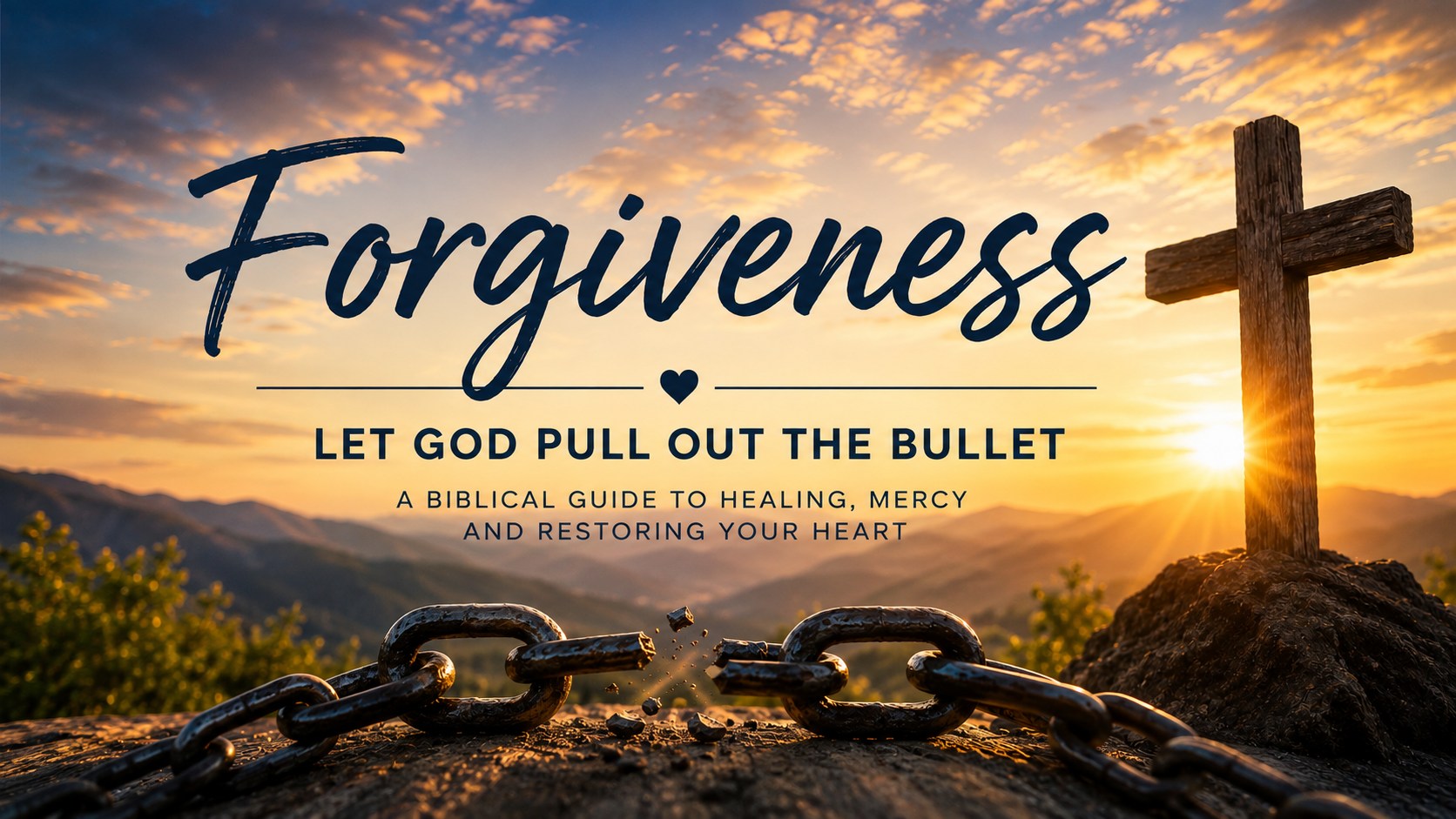
Forgiveness: How God Removes the Bullet
Discover Christian forgiveness through Jesus, release the pain of the past, let go of unforgiveness, and allow God to bring healing and peace.
What Comes First?
“In the beginning God created the heavens and the earth.” — Genesis 1:1 (NASB1995). What is your first priority? When you wake up, what receives your attention first? Is it social media? The news? Messages? Work? Your morning routine? Scripture begins with God. Before everything else, God was already there. John takes us even deeper: “In the beginning was the Word, and the Word was with God, and the Word was God.” — John 1:1 (NASB1995) The Word is Jesus. Before our problems, our relationships, our disappointments and even our wounds, there is God. That challenges us to consider how we approach each day. Before we allow yesterday’s hurt to speak, what would happen if we allowed God’s Word to speak first?
Sin Creates a Debt — Forgiveness Cancels It
Peter once approached Jesus with a question many of us have probably wondered ourselves: “Lord, how often shall my brother sin against me and I forgive him? Up to seven times?” — Matthew 18:21 (NASB1995). Peter wanted to know where forgiveness ended. How many times must someone hurt me before I am justified in withholding forgiveness? Jesus answered: “I do not say to you, up to seven times, but up to seventy times seven.” — Matthew 18:22 (NASB1995) Jesus then tells the parable of the unforgiving servant in Matthew 18:23–35. A servant owed his king an enormous debt that he could never realistically repay. Yet when the servant pleaded for mercy, the king forgave the debt. But that same servant found someone who owed him far less and refused to show him the mercy he had just received. This reveals something powerful about forgiveness: sin creates debt, but forgiveness releases the debt. When someone wrongs us, something feels owed. An apology. Justice. Restoration. An explanation. Sometimes even revenge. Yet Christianity begins with recognising the debt we ourselves could never pay. Through Jesus, God showed us extraordinary mercy. We forgive because we have first been forgiven.
Forgiveness Has a Cost
Forgiveness is not pretending that nothing happened. Under the Old Covenant, sacrifice demonstrated that dealing with sin carried a cost. Ultimately, Jesus fulfilled what those sacrifices pointed toward by giving Himself for our sin. Forgiveness still costs something relationally. When someone hurts you and you choose not to retaliate, that costs something. When you could embarrass them but remain silent, it costs something. When you stop constantly reminding them of what they did, it costs something. Forgiveness means surrendering your personal claim to revenge. Forgiveness doesn’t necessarily mean immediate trust. Forgiveness and reconciliation are related, but they are not identical. Trust may need to be rebuilt, boundaries may need to change, and some relationships may never return to exactly what they were.
Forgiveness Begins Before the Feelings Change
One of the biggest misconceptions about forgiveness is believing we must feel forgiving before we can forgive. Sometimes the decision comes first. You may forgive someone and still feel hurt when you remember what happened. You may forgive them while recognising that the relationship has changed. You may forgive them while still needing time to rebuild trust. Forgiveness is not always a feeling. Often, it is a decision repeatedly surrendered to God. Jesus warns us about the standards we apply to others: “For in the way you judge, you will be judged; and by your standard of measure, it will be measured to you.” — Matthew 7:2 (NASB1995). You can say: “What you did hurt me, but I refuse to become imprisoned by what you did.” Paul similarly writes: “Therefore let us not judge one another anymore…” — Romans 14:13 (NASB1995).
Let God Pull Out the Bullet
Maybe you have tried to move forward, but something keeps pulling you backwards. A conversation reminds you. A name triggers something. You see the person and immediately remember what happened. Perhaps the problem isn’t simply the memory. Perhaps the wound is still carrying the bullet. You cannot properly heal until the bullet has been removed. happened. We replay conversations, imagine what we should have said, think about what they deserve and repeatedly reopen the wound You do not need to carry the responsibility of personally settling every debt against you. You can hand justice to God. “God, You know what happened. You know what it cost me. You know how much it hurt. I am giving this debt to You. Let Him pull out the bullet. Then allow Him to heal the wound.
Maybe You Still Can’t Get Over It
Sometimes the hardest person to forgive is yourself. We believe God can forgive other people, yet quietly wonder whether He can truly forgive us. We replay our failures. We remember decisions we wish we could change. We punish ourselves mentally for things God is calling us to surrender. But if Jesus has paid the debt, why are we still trying to collect payment from ourselves? God’s mercy is greater than your worst moment. Forgiveness may not erase the memory, but it can change the power that memory has over you. Forgiveness does not change the past. But through Jesus, forgiveness can change what the past is allowed to do to your future.